FRANÇOIS @ HEX

From scheduling to AI strategy

How a meeting creation app became the AI strategy for an entire segment of an industry.

About me

Hi! I’m François.
Here’s a little about me.

Two colleagues discussing work at a laptop in front of a planning wall.

Some background on Corpaxe

What Corpaxe does

It helps asset managers and brokers with corporate access and more

Kind of like healthcare but in finance

Investment firms consume, brokers provide, no one knows what or how much at the end of the day

Our users

People working in high-compliance environments who love Excel

Fintech challenges

Also high compliance, not used to the modern SaaS world, initially slow to adopt AI

How it started
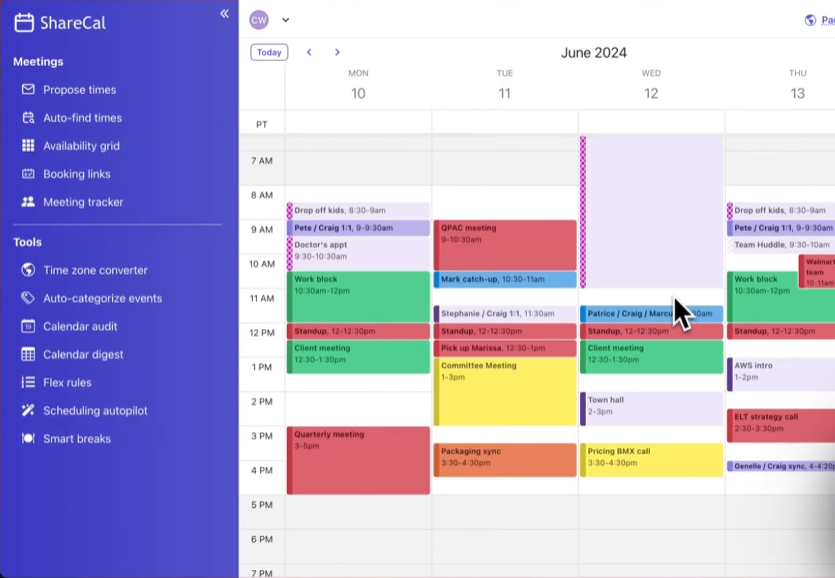
A big client asks “Integrate with ShareCal!”

ShareCal calendar interface showing a week of color-coded meeting blocks.

The request

The client wanted a familiar meeting-planning experience for time-consuming Corporate Access workflows.

The blocker

They expected integration with a tool we could not integrate with.

The commitment

Our CEO promised we would build it, creating a real delivery obligation.

The team

While engineers finished other work, the Head of Product and I shaped discovery, scope, and mock designs.

An operations professional reconciling calendars, room plans, and meeting records beside a laptop.

Meetings are more complex than you’d think

On the surface

A Calendly clone

How hard can it be?

Underneath

About 1 year of work

So we still have to integrate with the classic app. We’ll autofill the form instead of rewriting the logic.

The shift

We start building the planning interface.

Remember, meeting creation is hard.

Lots of edge cases like placeholders and planning with external actors.

A question is raised.

Wouldn’t this be easier as a chatbot?

A working prototype built in an hour.

The first AI product

Living on the edge

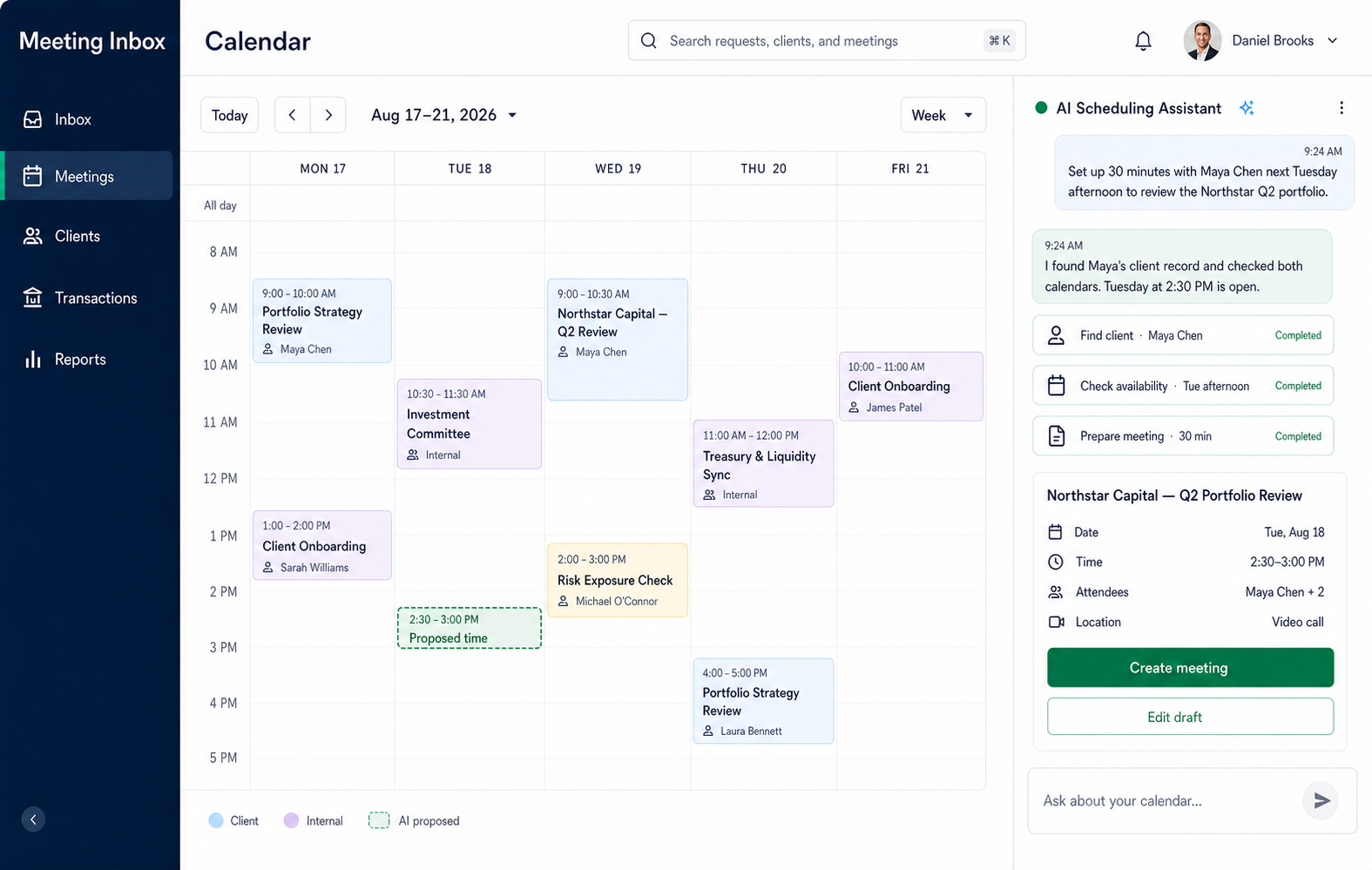
Meeting Inbox calendar with an AI scheduling assistant that looks up a client, checks availability, and drafts a meeting.

Start with AI SDK

Cloudflare Agents SDK was considered, but we did not yet trust it for this product.

Design for channels

The same asynchronous agent needed to work from Microsoft Teams, email ingestion, and eventually multiplayer sessions.

Build the transport

AI SDK did not support the WebSocket flow we needed, so we built a custom transport around Durable Objects.

Migrations and infra

Moving from the React Router/Remix Vite plugin to Cloudflare’s plugin took several buggy days; even preview URLs broke.

We aimed for multiplayer

We wanted async ingest from emails, Teams, etc.

A cross-functional team reviewing work together around a laptop.

In the meantime...

What we were building

A complete meeting planner.

Solving for one large client, doing everything.

Other clients were yelling

Make meeting entry disappear.

Unrelated projects surfaced loud complaints from other big clients. We already had meeting creation and an agent. Let’s take a detour: Concierge Meeting Autofill.

A laptop, planning document, and notebook arranged on a working desk.

Stop racing against the community.

The Christmas prototype

After watching a presentation on LangGraph, I spent a day rebuilding what we had done over several weeks, better and faster.

Switch to LiteLLM

Cloudflare AI Gateway did not provide the pricing visibility Product and Sales needed. LiteLLM made usage and cost legible.

Sunk cost conflict

On one hand we don't want to chase the shinies, on the other hand we shouldn't ignore innovation.

Data streams flowing from a Microsoft Azure cloud toward the Anthropic wordmark.

Infrastructure reality check

The Azure OpenAI perf issue

Queued inference is super slow

Dedicated instances would cost more than our entire infra budget

Anthropic to the rescue for lower costs…seriously?

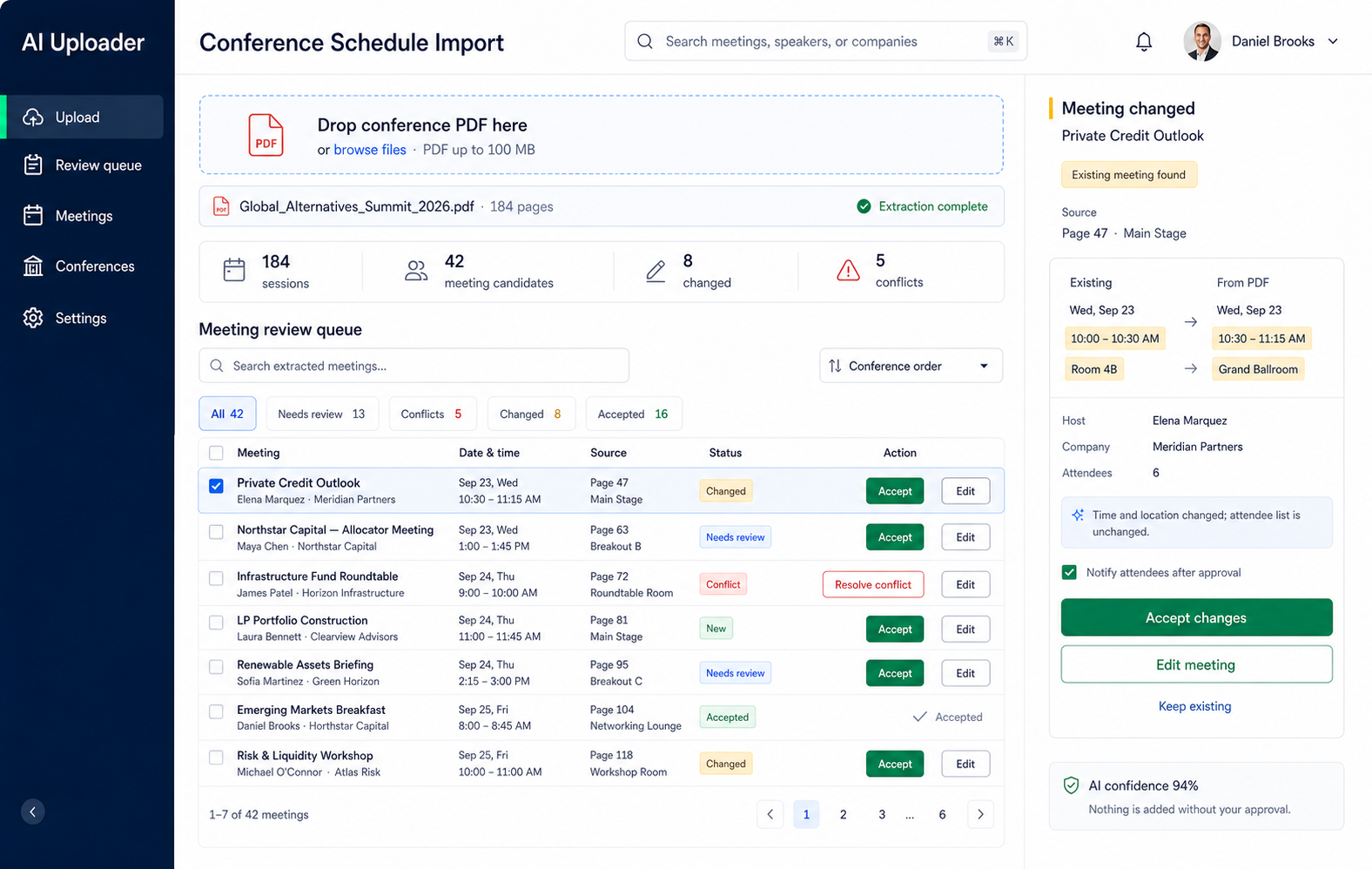
The AI Uploader interface: a conference PDF import with extraction stats, a meeting review queue, and a side panel reconciling changes to an existing meeting.

The AI Uploader

Another team had a similar problem: batches of conference meetings

AI Uploader, built by a separate team in C#, created batches of conference meetings from uploaded documents.

Don't put all our eggs in the same tech basket

We wanted more engineering-org exposure, including on the C# backend: Microsoft Agent Framework.

Upload a conference at once

Users could submit a list of meetings in one shot instead of entering each one through conventional UI.

Then update it from more documents

New files could revise the existing list. The merge was closer to a Git rebase than a simple import, and competitors did not offer it.
Beyond one product

AI solved industry-wide problems.

The pattern

Infinite need for configuration.

Example

The client uses initials, not names.

The unlock

Rules and skills bring down a complex configuration system to a text field.

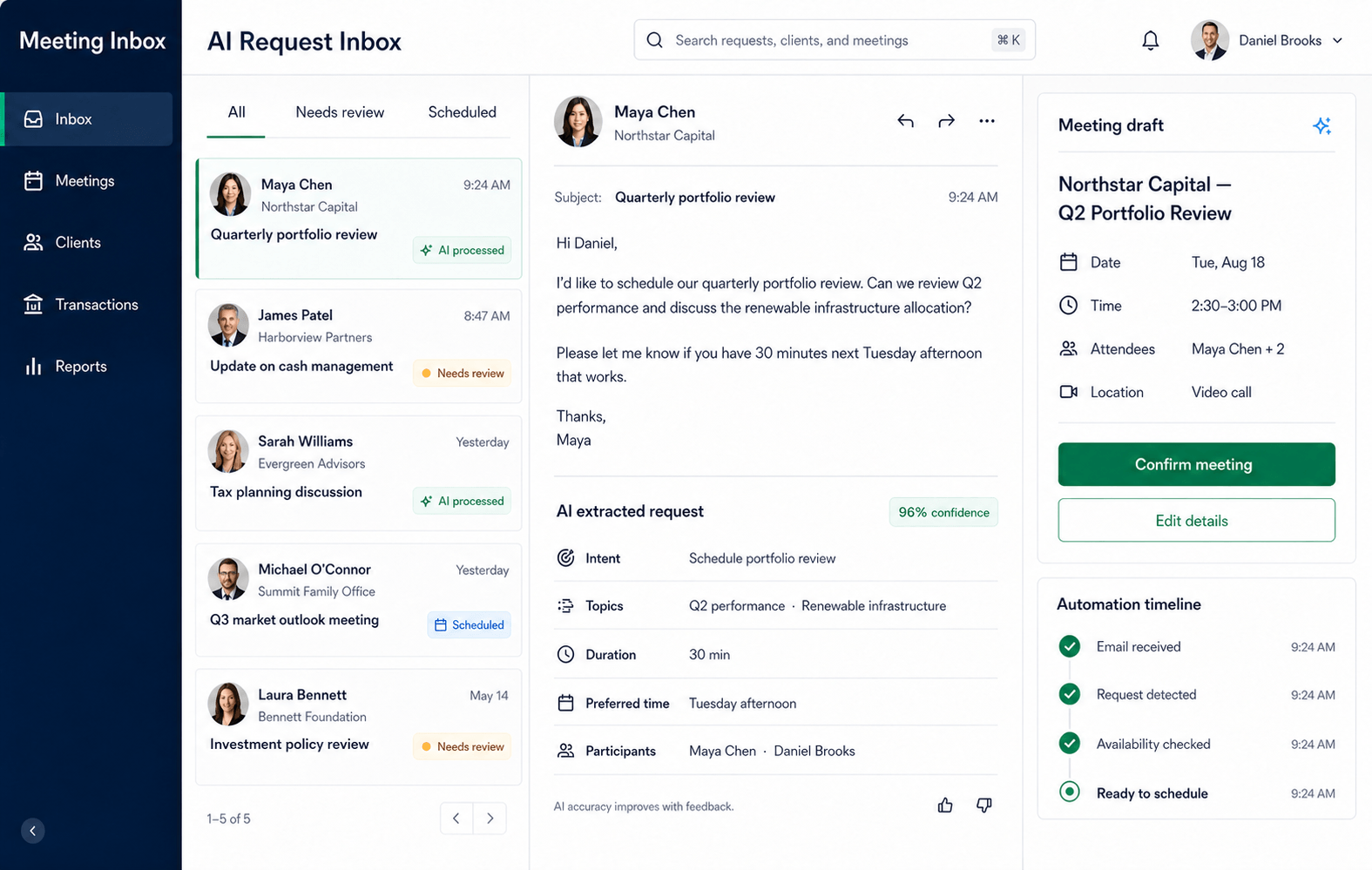
AI Request Inbox interface turning a client email into a confirmed meeting draft, with an automation timeline from email received to ready to schedule.
1week

to turn a board-level concern, “a half-finished chatbot will not sell,” into an AI Inbox MVP.

A cross-functional product team mapping an AI platform together on a large workshop wall.

Fast forward.

What success looked like

Adoption validated our course correction.

Broad rollout

Concierge and AI Uploader reached all customers. LiteLLM confirmed usage was significantly higher than expected.

Strong customer pull

Feedback was overwhelmingly positive. Some customers said AI may have prevented them from dropping Corpaxe.

Better economics

Costs were much lower than expected and became trivial once open-weight models entered the mix.

Qualitative signal: some users could show their managers they were adopting AI simply by using Corpaxe.

Operating strategy

The future

Build AI where conventional UI breaks down.

Lower the cost floor

Use open-weight models where quality permits and keep cost observable.

Use code mode for scale

Let agents operate safely across large datasets and complex batch meeting operations.

Make products MCP-first

Test the flow and backend before investing in a bespoke frontend.

Open the integration layer

Let clients connect their own vibe-coded apps at any point in the workflow.

Lessons

What we learnt.

The operating principle

Step back to move forward.

Follow customer value, preserve what works, and stay willing to change the product, even after the architecture is real.

Competitors followed. Customers now expect AI. New products must earn that expectation through value first.


Thank you

Questions?

Happy to discuss the product decisions, technical tradeoffs, or what I would do differently.

Appendix

For additional discussion

1 / 20